Interchangeable Physician with Dr. Lawrence Casalino
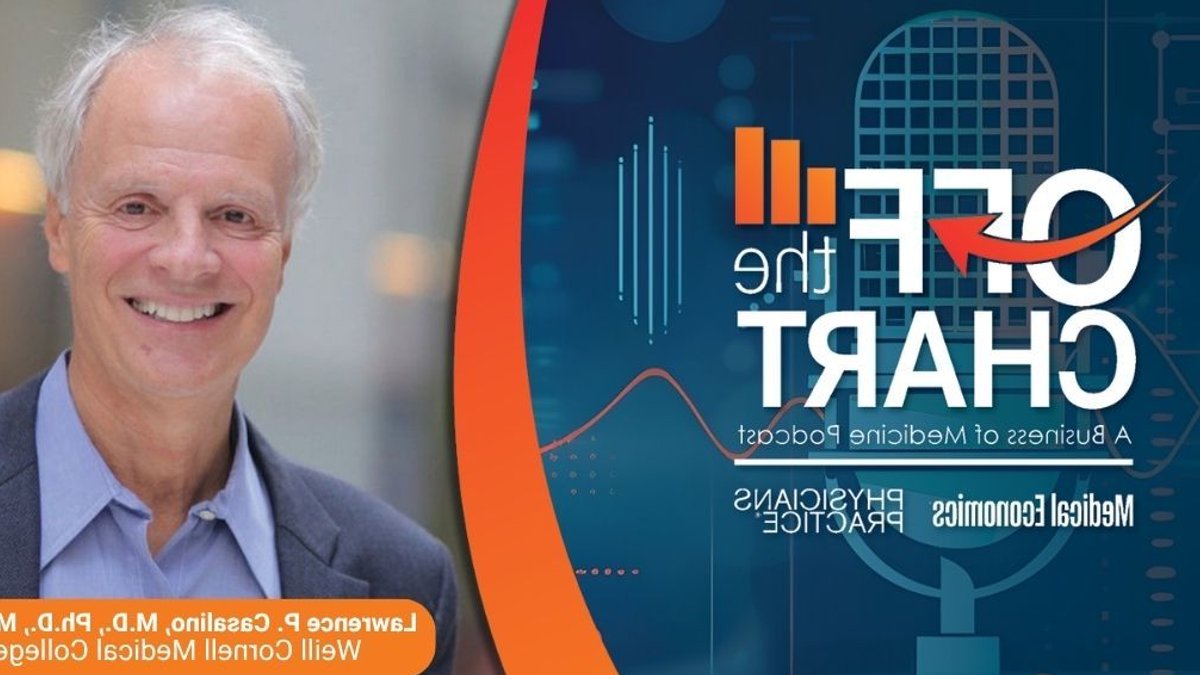
Lawrence Casalino spent two decades practicing primary care before moving into health policy research. He spent six years as a commissioner at the Medicare Payment Advisory Commission. Now a professor at Weill Cornell Medicine, he has a warning for a medical system that keeps swallowing independent practices into larger organizations: what you cannot measure is still worth caring about.
The case for consolidation—and the tradeoffs
Practices have good reasons to seek shelter inside larger organizations. Better leverage with insurers, relief from administrative tasks, and real support for electronic health record systems all get cited when physicians explain why they stopped practicing independently. Casalino does not dispute that these benefits are real. His argument is that the tradeoffs live in the parts of care nobody is measuring.
“Whether clinicians feel like professionals or like interchangeable parts decides the quality of everything a measurement program cannot see,” he told an interviewer with Medical Economics. That framing comes from a recent essay he published in the New England Journal of Medicine.
Related: Doctors Hear Fewer Suits, Pay More, White Says
Casalino identifies five forces driving practices toward consolidation. Independent physicians increasingly lack negotiating leverage with payers. The administrative burden has grown into something barely recognizable compared to 1980. EHR purchasing and ongoing support strain smaller operations. Policy uncertainty adds another layer of pressure. And younger physicians finishing training have different expectations about how they want to work. Each of these forces pushes toward the same outcome: fewer doctors running their own shops.
What gets lost when practices disappear
The argument for absorption tends to focus on what larger organizations can provide. Casalino’s concern is what they tend to lose. When a practice merges into a health system or corporate parent, something shifts in how the people inside it relate to their work. Financial pressure at the top of an organization reaches the exam room whether leadership intends it or not, he argues. The people making budget decisions may never set foot in a clinic, but their priorities still shape what happens between a doctor and a patient.
His research has found that physicians, on average, score higher on measures of altruism than the general population. That is not a small thing. A healthcare system that runs on quiet professional commitment from its practitioners depends on that commitment in ways it does not always acknowledge. Casalino worries that large organizations cannot help but treat the people inside them as interchangeable, and that this tendency has consequences beyond what any quality metric is designed to capture.
He uses a car mechanic analogy in the conversation. When you trust your mechanic, you follow the referral. That trust does not transfer easily when practices consolidate and patients end up seeing whoever is available. The relationship, and the continuity it depends on, gets harder to maintain.
Related: Canada must prepare for oil shocks and shortages
Casalino served on MedPAC, the advisory commission that reviews Medicare payment policy and makes recommendations to Congress. He describes the commission as bipartisan in its functioning, though he notes that Congress does not always move quickly on what it recommends. The gap between a policy recommendation and an actual change in law can stretch for years.
A test worth applying
The essay in the New England Journal of Medicine closes with a question Casalino thinks policymakers and practice leaders should ask themselves: does this decision make our physicians and staff feel more like widgets, or less? It is a test that works across settings, whether the context is compensation design, staffing ratios, or the pace of patient volume expectations.
Whether that test gains traction in policy circles remains to be seen. Casalino continues in his role at the Center for Physician Practice and Leadership at Weill Cornell. His work on physician autonomy and professional identity continues to show up in journals and at conferences. The underlying tension—between the efficiencies that scale can offer and the professional culture that independence tends to support—does not appear close to resolving itself.

Doctors Hear Fewer Suits, Pay More, White Says


