Focused Gaze Helps Marathoners Maintain Pace Near Finish
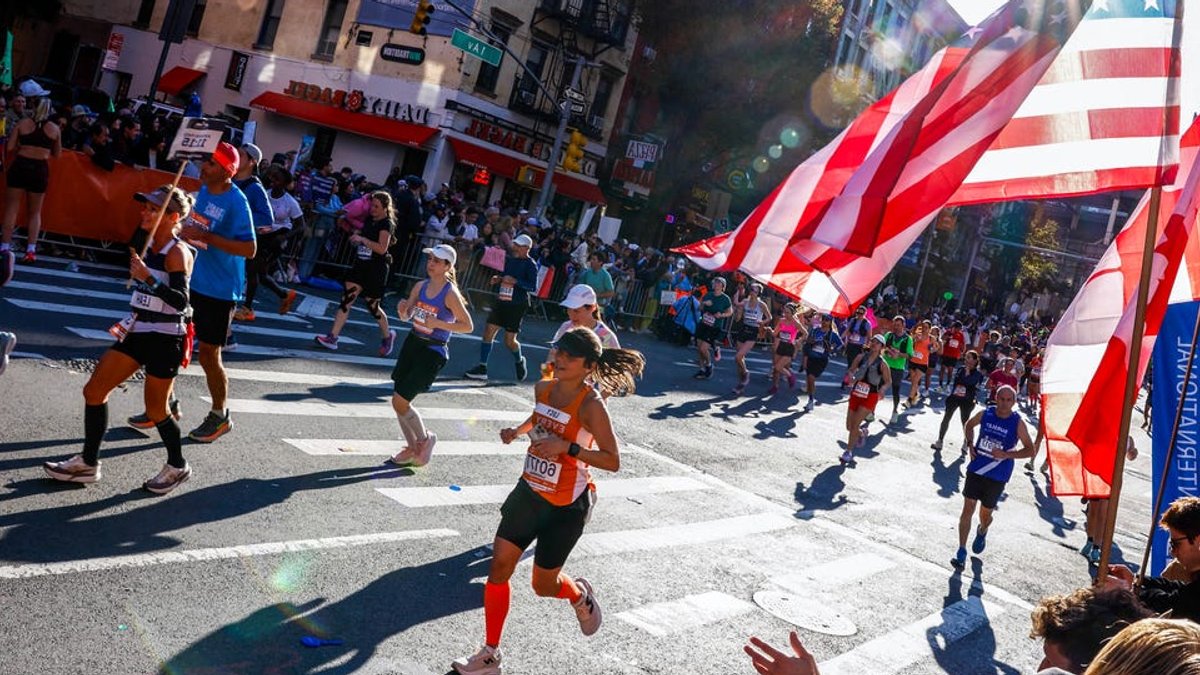
Research on a marathon mental strategy shows that narrowing visual and mental focus can improve performance in the race’s final miles.
Study Reveals Preferred Mental Tactics
The investigation, published in 2025 in the Journal of Experimental Social Psychology, surveyed about 1,000 recreational and competitive runners across various distances, gathering self-reports on how they directed their eyes and thoughts while running.
Participants described their visual attention habits and the mental techniques they employed, such as reminding themselves of specific running goals.
Analysis indicated that distraction and broad goal visualization correlated with slower speeds and lower satisfaction, according to lead author Emily Balcetis, associate professor of psychology at New York University. The findings suggest that runners who let their gaze wander tend to lose pace earlier in the race.
Emily Balcetis explained, “We may think distraction is a useful tool as we go farther into a run and it starts to hurt more and more.” She added that faster runners tend to use focused attention instead.
How Runners Can Apply Focused Attention
Focused runners narrow their gaze onto immediate subgoals, resetting each time they pass one, rather than scanning the entire course.
These subgoals involve monitoring breathing, pacing, and body mechanics, which helps maintain motivation and may lower the risk of strain.
Read Also: Nighttime Light Exposure Linked to Heart Damage
In practice, athletes might picture a spotlight on a specific marker ahead, such as a tree or a runner’s shorts, and shift the spotlight as they advance.
Emily Balcetis likened the method to “blinders on the sides of your head,” keeping peripheral visuals from pulling attention away.
She noted that a simple mantra like “eyes on the prize” can reinforce the narrowed focus, especially near the finish.
Timing the Shift in Strategy
The study advises reserving the focused-attention technique for the latter stages, when motivation wanes and fatigue intensifies.
Applying it too early may be exhausting, as shrinking attention requires effort.
Emily Balcetis said, “When you’re just starting, particularly in a race like a marathon, it is useful to think about why you’re running and to look around because that can give you energy during those early miles.”
She emphasized that as the run progresses, shifting to a narrowed focus becomes a key method for maintaining pace and reaching the finish line.


